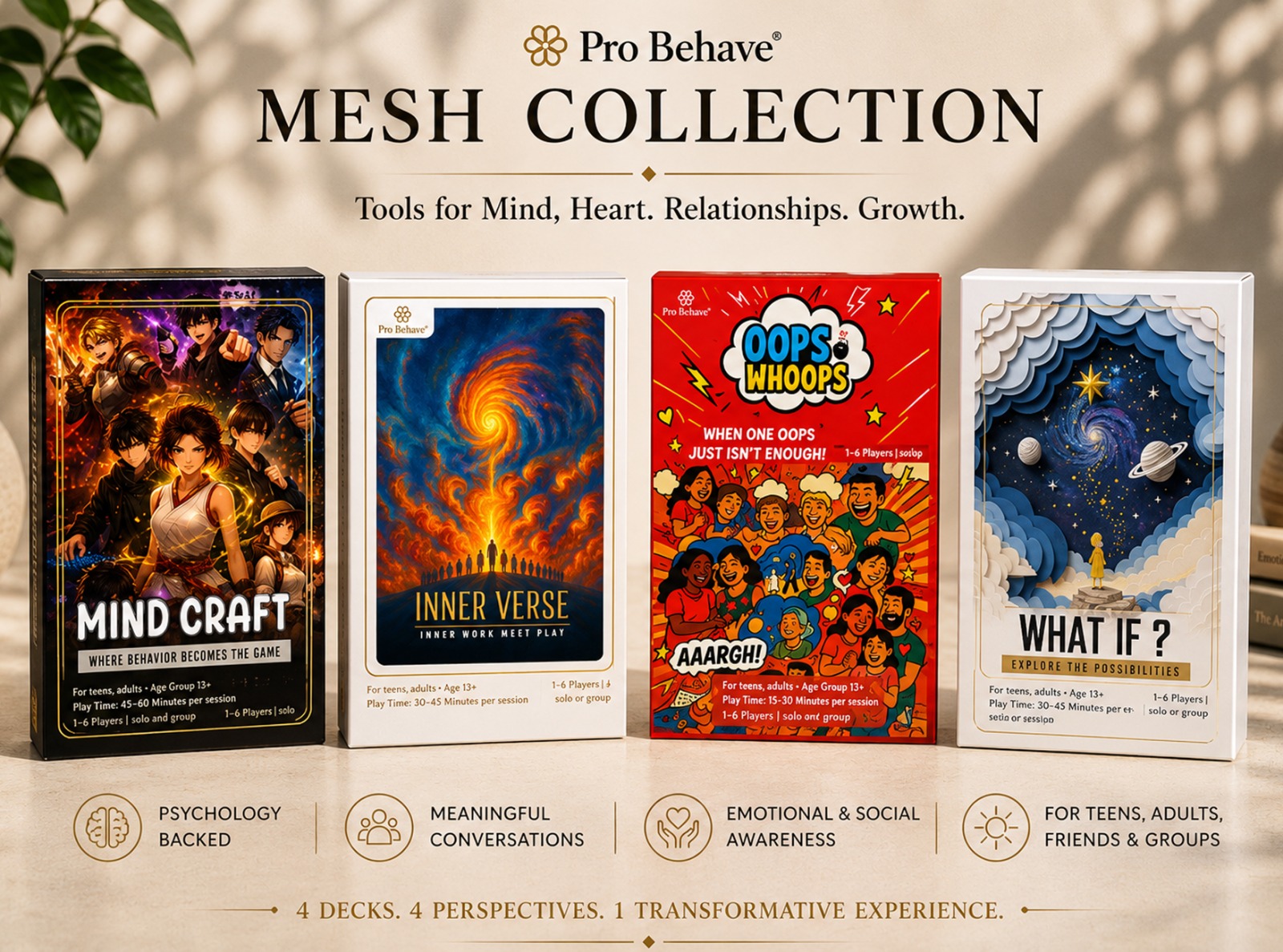
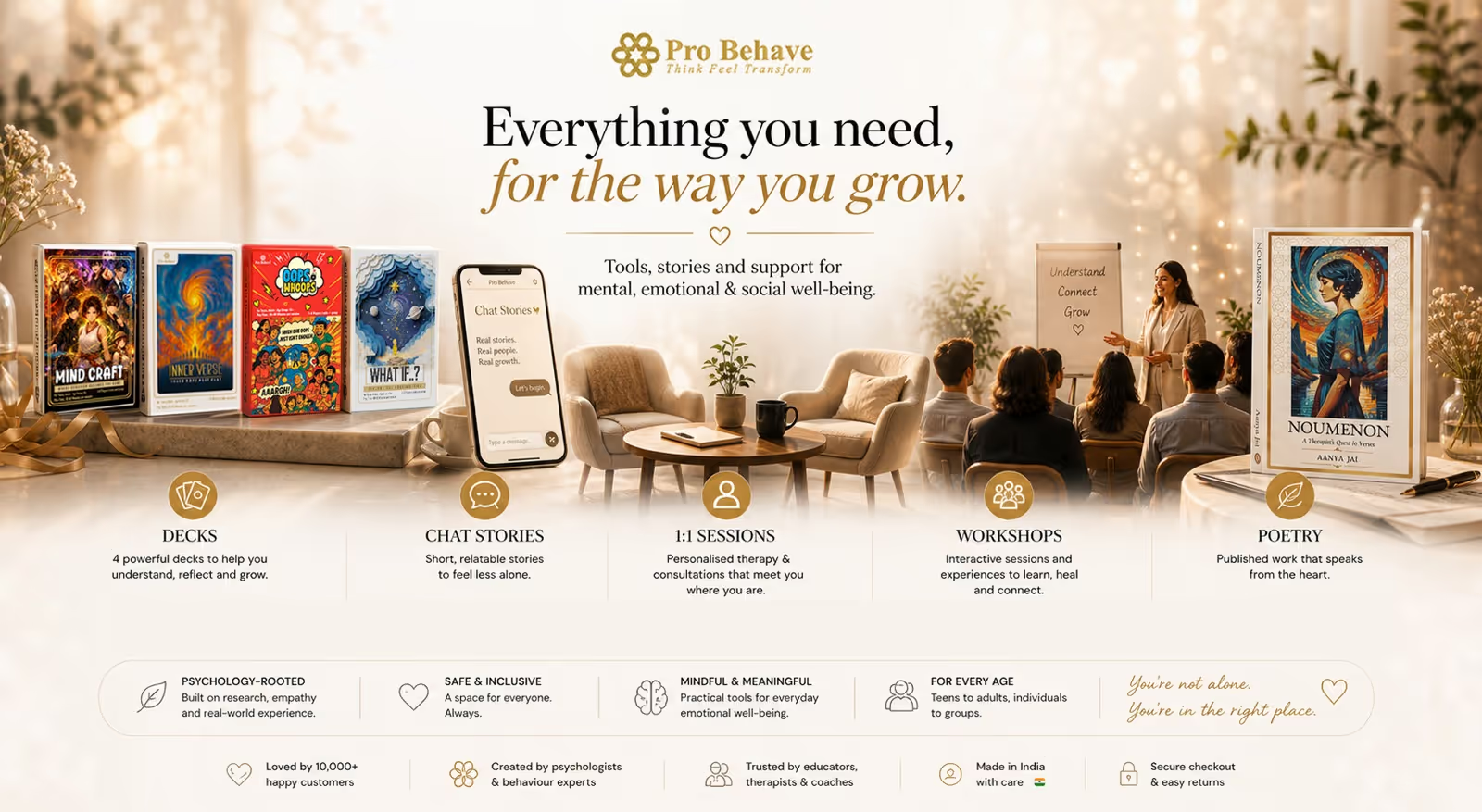
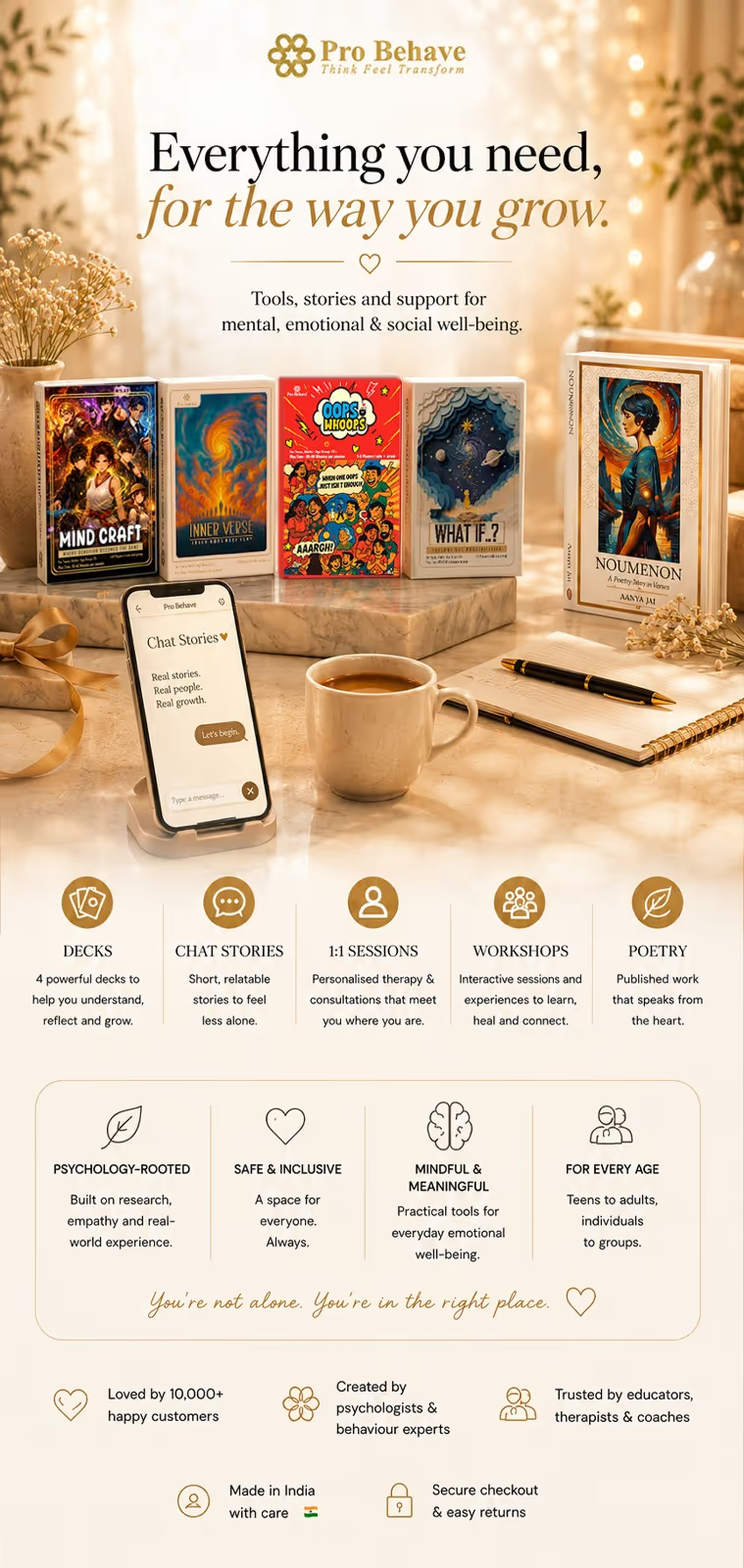
Pro Behave creates psychology-based conversation tools that build emotional intelligence, stronger relationships and real understanding.

Each deck supports a different part of how we think, feel and relate.

₹1,199
45% OFF

₹1,099
50% OFF

₹999
50% OFF

₹1,049
50% OFF


One-on-one consultations with Aanya Jai — gentle, psychologically grounded conversations to help you understand a pattern, navigate a transition, or simply be heard. No diagnosis, no jargon. Just clarity.
Explore articles on psychology, emotions, relationships, and everyday conversations to better understand yourself and the people around you.

When Consent Becomes Compromised in Kink
There been a noticeable rise in couples reaching out in therapy to navigate power, control, and consent dynamics rooted in trauma. These evolving patterns underline how vital it is to cultivate self-awareness, emotional literacy, and the capacity to pause before reacting. The violence we scroll through daily doesn stay on our screens it seeps into our nervous systems. Outrage algorithms, deepfake fantasies, and hypersexual media have quietly reprogrammed how we connect. Empathy has become fatigue; gentleness, a risk.As power becomes a fetish and pain a language of control, intimacy turns into performance. BDSM practiced without emotional literacy, consent renewal, or trauma awareness is leaving a trail of confusion, numbness, and shame. Many mistake domination for healing, submission for love, and chaos for chemistry. But beneath the leather and control lies something older a nervous system trying to rewrite its own fear. True erotic freedom isn about how far you can go it about how safe you can feel while going there. In a world obsessed with power, tenderness has become the final rebellion. It time we talk about ethics, empathy, and the new psychology of desire.When a Violent World Enters the Bedroom rise of global violence, political vandalism, and public injustice has seeped into the personal psyche. Continuous exposure to conflict-driven news cycles, outrage algorithms, and fear-based marketing keeps the nervous system in a state of hyperarousal. this climate, empathy fatigue and desensitization become normalized. People begin to internalize aggression as power, and tenderness as weakness. idea that world is cruel, so we must be tougher has become a psychological defense into relationships and intimacy. Digital consumption patterns reinforce this conditioning: algorithms profit from fear, polarization, and sexualized violence, subtly shaping how people desire, dominate, and disconnect. As compassion erodes, intimate spaces meant for safety, softness, and repair becoming battlegrounds of performance, control, and emotional numbness. When humanity most vulnerable spaces mirror the cruelty of the outside world, the result is a generation that mistakes hardness for strength and pleasure for connection. A New Age of Intimacy and Its Shadows Conversations around sexuality have become louder and more visible than ever. BDSM, kink, and role-play dynamics now circulate through popular culture and social media, often portrayed as symbols of freedom and empowerment. Yet behind this openness lies an emerging concern: a growing number of people genders engaging in BDSM practices without adequate consent, understanding, or emotional preparation. For some, this begins as curiosity. For others, it stems from the pressure to appear sexually liberated or adventurous. But beneath these motivations often lies unprocessed trauma, emotional loneliness, or an unconscious need for control and validation. Without awareness, what starts as exploration can become re-traumatization. The Silent Erosion of Boundaries BDSM is built on safety, mutual understanding, and ongoing consent. In contrast, BDSM often arises from what people consume online forums, or influencer posts fantasy is shown without context, negotiation, or aftercare. Trying out fantasies without full discussion or repeated consent is unethical. One-time agreement does not equal lifelong permission. In dynamics involving machistic or sadistic aspects, the risk of psychological and physical harm increases sharply. When one partner trauma history or emotional threshold is unknown, scenes can inadvertently trigger panic attacks, flashbacks, dissociation, or other severe forms of distress. The principle is simple: consent must be continuous, enthusiastic, and revisited regularly, especially when pain, control, or humiliation are involved. A Crisis Affecting All Genders This phenomenon affects both men and women, though in different ways. Increasingly, cases are emerging where women initiate or coerce partners into kink dynamics without informed consent or emotional readiness. In these situations, men may suppress discomfort to please, appear progressive, or avoid conflict entering fawn responses that erode self-trust and identity over time. Conversely, many women report experiences of being pressured into dominance or submission roles that mirror their earlier abuse dynamics, believing it to be a form of healing or empowerment. Without clear psychological boundaries, both partners risk reinforcing rather than resolving trauma. The outcome is similar: loss of autonomy, numbness, confusion between pleasure and distress, and long-term emotional exhaustion. The Fawn Response and the Disappearing Self When individuals prioritize their partner satisfaction at the cost of their own safety, they may enter the fawn response survival mechanism rooted in trauma. This can manifest as agreeing to unwanted acts, silencing discomfort, or confusing obedience with intimacy. time, this creates: * Erosion of authentic selfhood* Addictive highs and lows tied to the nervous system adrenaline cycles* Increased emotional dependency and shame* Chronic anxiety, fatigue, or depression The nervous system, designed to protect through fight-flight-freeze responses, becomes overstimulated. When these physiological highs are pursued repeatedly for pleasure, the body becomes addicted to chaos, and calm starts to feel unsafe. What is Re-Enactment? Re-enactment is a psychological process in which individuals unconsciously recreate situations or power dynamics from earlier traumatic experiences in an attempt to gain mastery or resolution. In relationships or sexual expression, this can appear as being drawn to partners or scenarios that resemble the original source of pain as control, humiliation, or abandonment. While the intent is often subconscious and rooted in a desire to the past, the result is usually repetition rather than repair. Without awareness or therapeutic guidance, re-enactment deepens the original wound instead of healing it, leaving both partners caught in cycles of confusion, guilt, or emotional harm. Case 1 Woman As a child she lived in a home where love and fear co-existed. Her father cheated on her mother, shouted during arguments and occasionally turned violent. Her mother endured it all absorbing the blows, forgiving the betrayals and insisting it was for the sake of family. From these scenes, the girl learned that love meant tolerance, that anger was dangerous and that silence was safety. She grew up believing affection must be earned through patience and sacrifice. As trauma expert Judith Herman (M.D.) and psychologist Alice Miller (Ph.D.) have written, such early conditioning blurs a child capacity for distress tolerance ability to hold emotional pain without collapsing or appeasing. Instead, she learns to regulate by compliance. In adulthood she often finds herself with partners who repeat the same patterns who alternate between affection and aggression, attention and withdrawal. When she mistreated, she justifies it as passion or believes she can love them into change. Deep down she replaying her parents story to turn pain into proof of devotion. This is re-enactment: her nervous system attempt to master the chaos of childhood by recreating it, a pattern described by psychiatrist Bessel van der Kolk (M.D.) and trauma therapist Janina Fisher (Ph.D.). In these moments, the boundary between consent and survival becomes blurred; her often hides a nervous-system The fawn response, as explained by Richard Schwartz (Ph.D.) and Stephen Porges (Ph.D.), leads her to prioritise safety over authenticity soothing, and staying even when the body wants to flee. But until she sees the cycle clearly, every repetition deepens the old wound. Healing begins when she realises that love can exist without fear, and strength without suppression lesson echoed by psychotherapist Terry Real (L.C.S.W.), who reminds that relational repair begins when power is redefined as care, not control. If She Becomes the Dominant She doesn call it anger. She calls it justice.Every command, every push, every moment she forces him to yield feels like rewriting a story that was never fair to begin with. For once, she gets to be the one who decides when it stops. There a pulse under her skin not lust, but fury. Years of being dismissed, silenced, made small, now compressed into the shape of control. She grips harder, speaks sharper, watches him flinch and somewhere inside, it feels right. you know how it feels, her body says, even if her mouth never does. She tells herself it just play, but it isn It the court she never got, the sentence she never heard passed. The rage she swallowed for years now finds a body to land on someone close enough to take it, someone safe enough to survive it. Pat Ogden (Ph.D.) describes this as a attempt to reclaim agency. But agency built on domination is still captivity only with reversed roles. The illusion of control is intoxicating, but short-lived. The body can tell the difference between justice and vengeance; both burn through the same nerves. When the high fades, she sometimes feels hollow not sorry, just unsatisfied. Because power can erase what happened; it can only mimic it with new rules. Healing begins when she stops punishing the present for the past when she realises that true strength isn in making someone yield, but in no longer needing to. Case 2 Man He grew up in a household where violence was casual and care conditional. His father used his mother her financially, ridiculing her when she couldn give more, and sometimes hitting her when she resisted. The boy saw his mother exhaustion and his father power, yet no one took his side when he cried or protested. His love and fear fused together, shaping a belief that vulnerability leads to humiliation. Psychiatrist Gabor Mat (M.D.) describes this as internalised shame: tenderness becomes dangerous because it once invited pain. Without early models of healthy distress tolerance capacity to sit with discomfort rather than discharge it through control nervous system seeks mastery through dominance or withdrawal. As an adult he swings between extremes and possessive in some moments, distant or cruel in others. He may unconsciously repeat his father dominance, or seek partners who give endlessly, testing how far unconditional love will go before breaking. When arguments escalate, he might shout or withdraw violently, re-enacting the unresolved rage he once swallowed as a child. Therapist Peter Levine (Ph.D.) explains that this kind of hyper-arousal can feel intoxicating yet unsafe; the body confuses intensity with connection. During such cycles, consent lines blur through malice but through confusion, where both partners mistake fear or surrender for agreement. The fawn and fight impulses collide, leaving intimacy entangled with survival instinct. This, too, is re-enactment unconscious effort to regain control over an old sense of helplessness. Without awareness, it turns affection into a power struggle and intimacy into fear. Healing begins when he learns, as psychiatrist Dan Siegel (M.D.) describes, to and tame emotional states strength from aggression and understanding that love built on control only mirrors the violence he once witnessed. If the Man Becomes the Submissive He tired of power. He seen what it does how it breaks things, breaks people. His father voice still echoes in his skull, thick with contempt. So now, he gives power away like an offering. When he kneels, it isn just arousal it penance. The thought hums under his breath: I the one being hurt, I can be the one who hurts. There a relief in being small, in having no decisions to make, in surrendering the burden of control. But beneath the calm submission, there a quiet terror a belief that if he ever stood up, he turn into his father. David Schnarch (Ph.D.) wrote that many submissive men safety in suffering. He one of them. The sting, the command, the discipline they feel like redemption. He calls it pleasure. Sometimes it is. But other times it the old wound replaying itself with better lighting and a safe word. The same helpless boy now gets to choose when to be helpless. Yet the script hasn changed only the director. Healing begins when he stops confusing surrender with safety. When he learns that gentleness isn weakness, and that power isn always violence. That the real courage isn in kneeling it in standing without becoming cruel. When Power Becomes a Substitute for Healing For some trauma survivors, humiliation becomes an art form not because it pleasurable, but because it familiar. When you spent years being made small, invisible, or voiceless, controlling someone else can feel like the ultimate revenge story. I decide what pain feels like. Sounds empowering, right? Except it isn People who lived through abuse often learn that safety equals dominance. If they can control the narrative, they won be swallowed by it again. And so, a few start believing that making others flinch, kneel, or apologize is a sign of power. It not. It a sign of unhealed terror wearing designer clothes. As Dr. Bessel van der Kolk reminds us in The Body Keeps the Score, trauma isn something that long ago something that still happens inside the body every day. When the body remains in survival mode, it mistakes intimidation for safety. Temporarily humiliating someone gives a rush, sure adrenaline feels like control when you never known peace but it doesn heal the wound that caused the need in the first place. Dr. Judith Herman, in Trauma and Recovery, calls this the of agency. It like taking the script of abuse and thinking that by swapping roles, you changed the plot. You haven You just become the newest actor in an old, tragic play. The tendency to humiliate others doesn come from strength. It comes from identification with the aggressor a concept Anna Freud described decades ago. The survivor unconsciously becomes what once terrified them, believing they in control now. The result? More guilt. More shame. And a nervous system that still on fire. Let be honest domination may look glamorous in glossy black leather, but beneath that sheen is the same old powerlessness in heels. It the illusion of strength, not the presence of it. Because true power never needs to humiliate; it simply is. Why It Doesn Work emotional caffeine gives you a buzz, then crashes you back into shame. keeps your body addicted to adrenaline and conflict. recycles the trauma roles one dominant, one submissive forever trading masks. kills intimacy, because you can connect while performing superiority. Or, as Dr. Peter Levine puts it bluntly: body will complete the trauma one way or another. Dominance just delays the reckoning. Healthier Ways to Reclaim Power 1. Somatic Work (Peter Levine) Reclaim your body through movement, not manipulation.2. IFS (Richard Schwartz) Talk to your inner instead of unleashing it on others.3. CFT (Paul Gilbert) Replace revenge fantasies with compassion-based courage.4. Sensorimotor Therapy (Pat Ogden) Use awareness, posture, and breath to rewire control.5. Narrative Therapy (Michael White David Epston) Rewrite the story without re-enacting the crime. Reflective Questions * When I feel powerful, am I dominating or integrating? * Is my control rooted in fear or freedom? * Would I still feel powerful if no one was watching, submitting, or bleeding? * What part of me still believes that to be safe, I must be feared? * What would empowerment look like if it didn rely on someone else submission? The Digital Mirage: AI, Deepfakes, and Online Fantasies Technology has further blurred the line between real and imagined intimacy. AI-generated images, deepfakes, and synthetic personas can convincingly mimic real humans a new realm of deception. Many individuals believe online roleplay or kink exchange is harmless because it lacks physical contact. Yet, the psychological effects can be equally intense, if not worse, due to the non-tangibility. The brain and nervous system cannot easily distinguish between real and virtual arousal or threat. Repeated exposure to high-intensity digital interactions those involving domination, humiliation, or emotional manipulation lead to: Anxiety, intrusive thoughts, or panic Body dysregulation (sleep issues, chest tightness, dissociation) Compulsive dependence on virtual validation Moreover, fake profiles, AI-enhanced images, and deepfake pornography have made it difficult to vet who is real. Emotional or sexual manipulation through such technologies can cause profound psychological damage. How to Vet a Potential Partner in the Digital Age Cross-verify identity through real-time video calls or in-person meetings before emotional or sexual sharing. Observe consistency in tone, communication, and values and impersonators often slip in patterns. Avoid oversharing early. Emotional and digital boundaries protect both privacy and agency. Check for urgency or secrecy. Manipulators use time pressure to bypass critical thought. Reflect before engagement. Ask whether curiosity is driven by genuine connection or escapism. Fantasy vs. Ethics Fantasy is part of human sexuality when acted out without context, informed consent, or safety frameworks, it becomes unethical.True intimacy demands transparency and accountability. Partners must be able to distinguish between: Fantasy as exploration, and Fantasy as avoidance or control. Exploration should include: * Clear boundaries* Mutual negotiation* Safe words and aftercare* Emotional check-ins post-interactionWithout these, even consensual experiences can evolve into coercion or emotional harm. Instant Gratification and the Loss of Discipline Social media culture promotes immediacy dopamine hits, viral trends, and impulsive gratification. In intimacy, this mindset fosters stimulation without substance.Relationships that skip vulnerability and reflection become thrill loops rather than emotional bonds. individuals equate chaos with love, calm feels like boredom. Over time, the absence of emotional discipline leads to disconnection, projection, and cycles of abuse disguised as or From Hollow to Whole: Rebuilding Emotional Integrity Healthy intimacy requires not just consent, but self-regulation, reflection, and responsibility.Key practices include: * Ongoing communication: consent and comfort are dynamic, not fixed.* Body awareness: ground before and after intimacy (breathwork, stretching, acupressure at PC-6 or K-1 points).* Aftercare: check emotional states and physical well-being post-interaction.* Therapeutic literacy: understand trauma influence before engaging in high-intensity play.* Balanced pacing: choose real connection over intensity, clarity over control. Self-Assessment Educational Resources The following tools can help individuals and couples explore emotional, psychological, and relational patterns safely: Attachment Relationship Style * YourSelfFirst Self Discovery Portal * YourSelfFirst Attachment Style Quiz * The Attachment Project Attachment Style Quiz Personality Compatibility * 16 Personality Lab Personality Assessment * Amaha Health Relationship Compatibility Test Mental Health Screening * Health America General Screening * Bipolar Assessment * PTSD Assessment * Adverse Childhood Experiences (ACE) Test Kink Compatibility Safety Frameworks * Ludosati Kink Compatibility Quiz * The Pomegranate Institute BDSM Safety Acronyms * Be More Kinky SSC vs. RACK Frameworks Kink-Aware Trauma-Informed Therapy Directories * Intimacy Curator * Alternative Story Note: These resources are intended for awareness and reflection, not as a substitute for medical or psychological diagnosis. Toward Ethical Desire The future of intimacy depends not on intensity but on integrity.Consent that is informed, repeated, and emotionally grounded protects both partners from harm.Technology, fantasy, and freedom can coexist with ethics only if guided by awareness and responsibility.In the end, the deepest pleasure lies not in dominance or submission, but in safety, respect, and mutual trust.
Read More

Anger Management: Turning Wildfire into Sacred Flame
When Anger Knocks on the Door Imagine anger as a visitor at your door. Sometimes it comes in roaring, banging its fists, demanding to be let in. Other times it a quiet knock, a signal that something precious inside you needs protecting. If you slam the door shut, anger doesn leave leaks through the cracks as resentment, sarcasm, or illness. If you throw the door wide open without discernment, it storms through, breaking everything in its path. The art is learning to greet anger like a messenger to what it brings without letting it ransack your home. The Two Faces of Anger Healthy Anger is like fire in a hearth. It gives warmth, cooks food, provides light. It sets boundaries without burning down the village. Example: A mother calmly telling her partner, you dismiss my ideas, I feel hurt. I need partnership, not dismissal. Destructive Anger is wildfire. Once lit, it spreads rapidly, consuming trust, respect, and safety. Example: A partner hurling insults or slamming doors over a minor disagreement. Harriet Lerner (The Dance of Anger) reminds us: is not a character flaw; it is a signal. But if the signal turns into smoke and fire, the real message gets lost. Ego Anger vs. Justice Anger Think of ego anger as a bruised balloon swells up at the tiniest prick. Someone doesn greet you, and suddenly you boiling inside: dare they ignore me? This anger protects pride, not dignity. It fragile, easily offended, and often disproportionate. Now picture justice anger as a lioness protecting her cubs. It is fierce but clear: it rises when life, fairness, or dignity is under threat. Think of Martin Luther King Jr. calm but powerful anger against racial injustice mobilized change, not chaos. Trauma survivors often confuse the two. A small slight can feel like betrayal because the nervous system is reliving old wounds. Healing teaches us to ask: my lioness protecting my dignity, or is my balloon just bruised? Confidence vs. Arrogance: The Twin Flames Confidence is like standing tall under the sun. It radiates, but it doesn need to cast shadows on others. It says: matter, and so do you. Arrogance is like carrying a torch too close to someone face. It insists: shine, so you must dim. Healthy anger, expressed with confidence, sounds like: is not okay for me. Arrogant anger, fueled by ego, says: are not okay. How Women Often Show Anger: Silence, Smiles, and Subtle Wars For many women, direct anger was never allowed. Girls often grow up hearing: girls don shout, answer back, nice. So their anger takes on quieter, hidden forms: Passive Aggressiveness: Withdrawing affection, delaying tasks, promises, or using sarcasm instead of direct words. Manipulation: Using guilt, subtle threats, or indirect comments instead of saying, hurt and I need Over-pleasing: Swallowing anger until resentment builds, then leaking it through cold shoulders or martyrdom. Harriet Lerner notes in The Dance of Anger: are taught to fear their anger, and so they express it sideways. The tragedy is that sideways anger confuses relationships signals pain but hides the need behind smoke and mirrors. Healthy practice: Replace sarcasm with clarity. Instead of fine, do whatever you want, try feel disappointed. I need us to decide this together. Shadow Work Simplified: Meeting the Hidden You is Carl Jung term for the parts of ourselves we disown rage, selfishness, even ambition. When denied, they show up as projections or manipulation. Shadow work isn about fixing the but understanding it. Steps (gentle and simplified): 1.Notice Triggers: Who irritates you most? What qualities do you judge harshly? These often mirror disowned parts of you.2.Name the Shadow: Write: judge this person for being selfish. Then ask, in me does selfishness live? with It: Journal or draw your shadow like a character. Ask: are you trying to protect? Not Erase: Instead of saying, must never be selfish, you can reframe: I need to put myself first healthy. Shadow work turns hidden saboteurs into hidden allies. Freud Defense Mechanisms: How We Dodge Anger Freud observed that when emotions (especially anger) feel unsafe, the psyche builds defenses. These mechanisms protect us but can also distort reality. Denial: Pretending nothing is wrong ( not angry, it fine Projection: Accusing others of the very anger you carry ( so hostile! when you seething). Displacement: Redirecting anger to a safer target (yelling at a child after being insulted by a boss). Repression: Pushing anger deep down until it leaks out as illness or anxiety. Rationalization: Justifying mistreatment ( shouts because he loves me Dealing With These Defenses Gentle Awareness: Instead of shaming yourself, notice: I projecting right now. Awareness softens defenses. Channeling: If you displacing anger, redirect it to safe outlets art, journaling. Reframe with Curiosity: When rationalizing, pause: my friend said this, would I believe it was okay? Practices: Expressive arts, journaling, somatic movement allow repressed anger to surface in safe ways. ✨ Closing Thought: Women anger has been buried under centuries of conditioning. Shadow work and understanding defenses help unearth it, not to explode but to express with dignity. Healthy anger then becomes not manipulation or silence, but a loyal ally guarding self-respect. Where Does Anger Begin? The Psychological Roots In childhood, if your tears were mocked, your anger punished, or your voice silenced, you might have learned that anger = danger. Some children suppress it until it turns into depression or anxiety. Others explode because it the only modeled form of power. Trauma survivors often carry anger like an heirloom. Bessel van der Kolk (The Body Keeps the Score) notes that the body injustice. A raised voice, a dismissive gesture, can ignite old fires stored in muscle tension, heart palpitations, or migraines. Pete Walker describes flashbacks, where the intensity of today anger is magnified by yesterday wounds.Metaphor: It like carrying a backpack full of stones. Today pebble of irritation feels like a boulder because of the weight already inside. How We Learn to Express Anger Families are the first classrooms of emotion. In homes where anger was violent, children learn fear. In homes where anger was ignored, children learn invisibility. In homes where anger was respected, children learn discernment. Marshall Rosenberg (Nonviolent Communication) describes anger as a tragic expression of unmet needs. Example: A child slamming a toy may actually be saying: me, value me, hear me. Managing Anger: Tools for Transformation The Pause: From Volcano to Signal Fire Like a volcanologist monitoring tremors, learn to notice early signs: clenched jaw, racing heart, shallow breath. Naming these gives choice: am angry. I can decide how to express it. Distinguish Past from Present Ask: this person in front of me the one who hurt me years ago am I overlaying the past onto them? Example: Your partner forgets to call, and you feel abandoned like a child again. Journaling can help separate today incident from yesterday wound. Somatic Release: Let the Body SpeakAnger stuck in the body festers. Move it: dance, run, punch a pillow, shake your hands. As van der Kolk says, body needs to complete the action it never could. Reframe with Narrative Therapy Rewrite the story: anger does not make me bad. It shows I care about respect. Example: Instead of saying, always so explosive, say, learning to use my fire to light, not to scorch. Fences, Not Walls Think of boundaries like a garden fence: they protect what precious inside without cutting you off from the world. Healthy anger helps build these fences: I won accept that tone. Autonomy and Choice Trauma survivors often feel that choice = rebellion. But true autonomy is gentle power. Start small: choose your meal, your clothes, your daily rhythm. This sense of agency reduces the need for anger to assert itself explosively. Examples in Daily Life At Work: Your colleague takes credit for your idea. Ego anger: useless and always stealing credit! Justice anger: noticed my contribution wasn mentioned. I appreciate if it acknowledged. Home: Your child spills juice on your papers. Destructive anger: you ever be careful? You ruin everything! Healthy anger: Take a breath, then say, feel frustrated because these papers are important to me. Let clean this together. In Relationships: Partner forgets your anniversary. Ego anger: Silent treatment, mocking, sarcasm. Healthy anger: felt hurt when the day was forgotten. This matters to me because our bond is important. Closing: Fire as Sacred Teacher Anger is not a curse. It is the ember of your life force. Unchecked, it can burn forests; guided, it can light the path to truth. Trauma experts agree: our task is not to extinguish anger but to understand its language between the ego fragile cry and the soul righteous roar. As Pete Walker reminds us: anger is the loyal sentry that guards our self-respect. And like a sacred flame, when tended, it warms, protects, and illuminates without destroying.
Read More

The Healer’s Shadow
Ethics, Power, and Responsibility in Healing Spaces. Introduction: The Paradox of the Healer Healing is as old as humanity itself. From the earliest shamans and village wise women, to the modern psychotherapist in their office or the spiritual reader behind a screen, human beings have always turned to others in moments of suffering. When we are vulnerable afraid, or confused reach out to those who claim to see further than us, who promise clarity, safety, or guidance. But here lies a paradox. Many healers therapists, holistic practitioners, coaches, or spiritual guides themselves drawn to healing because they have lived through suffering. They know pain, they know what it is to feel lost, and they wish to transform that pain into service. This origin story can be profoundly compassionate. Yet it also carries risk. The wounds that make someone sensitive to others can, if not examined, leak back into their practice. When clients entrust their stories, they do so at their most fragile. If the healer shadow enters unacknowledged through burnout, projection, or authoritarian certainty result can be damaging. Harm done in a healing space cuts deeper than ordinary hurt. To be shamed by a stranger is painful; to be shamed by someone you sought for safety is devastating. This essay explores the shadows of healing psychology, history, and esoteric traditions argues for grounding therapy and holistic guidance in universal virtues: humility, compassion, honesty, justice, and above all, hope. The Shadow of the Healer: Carl Jung Warning Carl Jung, the Swiss psychiatrist, spoke of the shadow unconscious parts of ourselves that we deny, repress, or hide. For healers, the shadow may take many forms: cynicism after years of hearing suffering, jealousy of a client freedom, fear of being wrong, or shame about their own unresolved trauma. If healers avoid their own shadow, it inevitably seeps into their work. A therapist stuck in an unhappy marriage may warn every client against reconciliation. A spiritual guide disillusioned with men may insist no men exist in the world. A coach who feels powerless may dominate clients with rigid prescriptions. Jung wrote, does not become enlightened by imagining figures of light, but by making the darkness conscious. Healers cannot serve from denial. They must constantly face their own shadows so they do not project them onto the vulnerable. Shadow work requires humility: the capacity to say, may be wrong. Let me hold space for your truth, not impose mine. Burnout and Projection: The Silent Epidemic Modern psychology recognizes that healers are at risk of vicarious trauma, compassion fatigue, and burnout. Day after day, they witness grief, abuse, addiction, despair. Without supervision or self-care, they become weary. Weary healers sometimes stop listening and start pronouncing. Instead of curiosity, they offer conclusions. Instead of exploring, they project. Consider the client who seeks therapy for loneliness but is told: are doomed to this cycle forever. Or the woman exploring unconventional love, dismissed as Or the man searching for courage, told by a cynical coach that never change. These statements do not heal; they wound. And the wound is subtle the client often believes the authority of the healer over their own inner compass. The tragedy is compounded when healers fail to do repair work. In healthy therapy, a mistake can be acknowledged: realize what I said may have felt harsh. I like to explore it differently. Repair itself can be healing, teaching clients that even authority figures can admit wrongs. But too often, healers cling to control, leaving clients confused, silenced, or ashamed. Universal ethics here demand accountability and honesty. A healer who can apologize is not weak; they are strong enough to protect the dignity of those they serve. Cargo Cult Psychology: When Science Becomes Theatre Physicist Richard Feynman warned of cult science that look scientific but lack substance. In psychology and healing, we see something similar: cargo cult psychology. Charts, brain diagrams, pseudo-neuroscientific jargon create the appearance of science, but without rigorous evidence. NLP (Neuro-Linguistic Programming) is one striking example. It promises to the mind through language and body cues. Its language borrows from neuroscience and linguistics, but decades of research show no reliable evidence for its claims. Scholars often categorize NLP as pseudoscience. DMIT (Dermatoglyphics Multiple Intelligence Test), popular in India, claims to reveal intelligence through fingerprints. The Indian Psychiatric Society has formally denounced it as lacking all scientific basis. Thought Field Therapy (TFT) prescribes tapping sequences on the body to resolve trauma. The American Psychological Association lists it among discredited therapies. These systems are not inherently They may provide metaphorical frameworks, symbolic mirrors, or placebo comfort. But presenting them as science is dishonest and dangerous. Here the universal virtue is truthfulness: offering tools honestly as symbolic aids, not as medical facts. Positive Psychology: Promise and Pitfalls In the late 1990s, Martin Seligman introduced positive psychology, urging psychology not only to treat illness but also to study resilience, gratitude, and human flourishing. This was revolutionary in its time. For decades, psychology focused on pathology; positive psychology reminded us of joy. But every movement has shadows. Positive psychology sometimes slid into toxic positivity: pressuring clients to think positive, invalidating pain. It sometimes ignored systemic realities: poverty, oppression, or trauma cannot be solved by gratitude journals alone. And like many movements, it became commercialized into endless apps, hacks, and quick fixes. The virtue missing here is wisdom balance of acknowledging suffering while nurturing hope. Flourishing is not denial of pain but integration of joy and sorrow. Real positive psychology must rest on compassion and realism, not slogans. Manifestation: Between Gimmick and Faith Manifestation culture boards, affirmations, of attraction everywhere. At its core, it draws from psychology: the principle of the self-fulfilling prophecy. Believing in possibility often changes behavior try harder, notice opportunities, persist through setbacks. In this sense, manifestation has truth. But its misuse is rampant. People are told they illness through negativity. Failure is shamed as a failure of belief. Manifestation is sold as a product, promising abundance if you buy the right course. Here, faith is being repackaged. True faith in spiritual traditions worldwide not blind entitlement. It is trust in meaning, patience in uncertainty, and courage without guarantees. Faith does not blame victims; it strengthens resilience. The universal virtue is hope without arrogance. Esoteric Traditions: Gifts and Responsibilities Humanity has long turned to symbolic systems for guidance. The Theosophical Society, founded in 1875, introduced concepts like the Akashic Records into global discourse. Tarot, born in Renaissance Europe as a card game, evolved into a mirror of archetypes. The I Ching in China and If divination in Africa guided seekers through metaphor. Their value lies not in literal prediction but in symbol and story. A tarot card does not fix destiny; it opens reflection. The Akashic Records, if understood symbolically, are not a cosmic library but a way of accessing intuition and archetypal memory. When used responsibly, these tools empower clients to see patterns and possibilities. When misused, they enslave clients to fear: marriage will ruin you, love will end in seven years. The universal ethics here are discernment and respect for free will. A true guide says, symbol may suggest a path does it mean to you? They do not dictate destiny. The Marketplace of Healing: Elitism and Exploitation Today healing is also a marketplace. Coaching packages, NLP certifications, manifestation workshops is sold as a product. Some practitioners empower clients; others foster dependency. This is not new. In ancient India, certain Brahmins monopolized access to God, demanding rituals as intermediaries. In medieval Europe, priests controlled salvation through the Church. In both cases, ordinary people were disempowered. Today, a similar elitism appears when healers present themselves as the only gatekeepers of truth, selling access at a high price. Knowledge becomes a commodity. The antidote is the virtue of justice and fairness: healing knowledge should be accessible, transparent, and aimed at liberation, not control. Polarity Wars: Masculine vs Feminine Simplifications Another modern shadow is the rise of polarity frameworks. Workshops proclaim the battle of masculine and feminine. While archetypes can illuminate, they also oversimplify. A man in pain may be reduced to masculine. A woman with ambition may be told she is masculine. Couples may be forced into rigid roles, rather than honored as complex humans. Jungian psychology reminds us that every individual carries both anima and animus, light and shadow. Healing requires nuance, not polarization. The universal value here is respect for human dignity, beyond archetype. Boundaries, Consent, and the Ethics of Care Certain ethical principles must anchor all healing work: Respect for autonomy: Clients are the final authority of their lives. Non-maleficence: Do no harm; avoid shaming or instilling hopelessness. Beneficence: Aim to leave clients lighter, more dignified, more free. Justice: Offer care fairly, without discrimination or elitism. Humility: Admit mistakes, invite correction, and honor client narratives. Universal virtues honesty, compassion not abstract; they are practical safeguards. A healer who checks in with a client feelings, who apologizes for harm, who listens more than they speak virtues are the real foundation of safe healing. Hope vs Hopelessness: The Greatest Gift The deepest wound many clients carry is shame: shame about abuse, love, parenting, or identity. Healers who project hopelessness will always be alone that shame. The most ethical act a healer can perform is to leave a client with hope. Hope does not mean promising outcomes. It means affirming possibility. Psychiatrist Viktor Frankl, survivor of Auschwitz, wrote: who have a to live, can bear with almost any Healing at its best helps people find their That is a sacred responsibility. Global and Indian Voices: Wisdom Across Traditions Throughout history, ethical healers have insisted on dignity and transparency: Irvin Yalom, existential psychotherapist, emphasized revealing humanity, not hiding behind authority. Carl Rogers taught unconditional positive regard clients without judgment. Swami Vivekananda urged seekers to find truth that liberates, not enslaves. Reformers across traditions broke monopolies on sacred access, insisting knowledge belongs to all. These voices remind us: healing must liberate, not bind. Reclaiming Free Will: The Ethical Core Perhaps the most universal ethical principle is free will. Healing must affirm: Guidance is not destiny. Clients can disagree and choose their own path. The role of the healer is accompaniment, not control. Without free will, healing becomes domination. With it, healing becomes empowerment. Conclusion: Light, Shadow, and Human Virtue Healing is not about erasing shadow. Every healer carries both gift and risk. The ethical path is not perfection but integration: facing one own darkness so it does not spill onto others. The real foundation of safe healing is not technique, not prophecy, not charisma. It is virtue. Humility to admit wrong. Compassion to sit with suffering. Justice to make healing accessible. Honesty to avoid false promises. Hope to light a way forward. Clients should leave healing spaces not shamed, bound, or afraid dignified, free, and reminded of their inner strength. In the end, whether through therapy, tarot, coaching, or prayer, healing must serve one truth: You are enough.You have free will.There is always a path forward.Light and shadow are both part of you. When healers embody this, they do not close doors. They open them.
Read More

The Mirage of Love: Healing Trauma & Re-Wiring Love
When the High pretends to be Love We inherit our first language of love long before we speak: a look that warms, a tone that cuts, a door that slams, arms that gather us back. When hurt is followed by sudden comfort, the body learns a dangerous equation + relief = love. Many of us go on to chase that exact chemistry in adult life, calling it passion. Some of us meet partners who feel like home and hurricane all at once. Some wander toward dominance and submission, hoping that if surrender is chosen, it might finally feel safe.This is a story about that delicate border play becomes harm, where intensity becomes addiction, where culture sells us second-hand feelings, and where humility can redeem love. I walk with you as a counsellor would: slowly, clearly, with your dignity in the center. can be loud, but safety is quiet. If your body only relaxes after pain, the may be relief love. 1) Why intensity feels like love: the trauma-high When a caregiver wounds and then soothes slap then a hug, a cutting word then a laugh child nervous system binds pain to tenderness. In adulthood, the pattern repeats: a partner shouts then turns soft; withdraws then returns; humiliates then holds. The relief that follows danger floods the body with chemistry we misread as passion. This is trauma bonding, a cliff-fall followed by mid-air rescue. Terror + relief becomes addictive, and soon we crave the fall just to feel the catch. masquerading as passion is a common trauma echo. If the moments follow harm, you likely chasing a nervous-system swing. 2) Understanding Triggers, Limerence Flashbacks: Learning to Re-wire your brain Healing from trauma means learning how the mind and body respond to reminders of the past how to gently rewire those responses into resilience. 🔹 TriggersDefinition: Triggers are reminders or external activate old wounds. They can be:Internal: intrusive thoughts, sudden body sensations, strong emotions. External: songs, smells, words, places, or even certain facial expressions. Impact: A trigger signals the nervous system to prepare for danger, even if the present is safe. This can cause anxiety, withdrawal, panic, or anger.Example: Walking into a coffee shop where a painful memory is attached. The smell of coffee or a familiar love song playing can suddenly bring heaviness or unease. 🔹 FlashbacksDefinition: Flashbacks are when a trigger overwhelms the system, leading to re-experiencing past events. Unlike ordinary memory, flashbacks feel alive and present.Types of Flashbacks:Emotional: sudden waves of fear, grief, shame. Somatic: tight chest, stomach knots, trembling, migraines. Mental/Visual: vivid images, voices, or replayed scenes. Why They Happen: The brain cannot distinguish between past and present under stress. The body reacts as if danger is happening again if the person is safe. 🔹 LimerenceDefinition: Limerence is an intense, involuntary infatuation or obsession with another person. It is marked by intrusive thoughts, euphoric highs when attention is given, and crushing lows when it is withdrawn.How it Connects with Triggers Flashbacks:A song, place, or notification sound can spark longing. Past experiences of rejection or abandonment may resurface as flashbacks.The nervous system confuses fantasy with safety, pulling one into cycles of obsession. Key Point: Limerence is less about genuine love and more about unmet needs, fantasy, and longing. 🔹 Depressive TendenciesDepression can follow the exhaustion of repeated triggers, flashbacks, or limerent cycles. It may show up as:Persistent sadness, hopelessness, or numbness.Loss of interest in activities once enjoyed.Sleep or appetite changes.Difficulty concentrating or making decisions.Feelings of guilt or worthlessness.Depressive tendencies can worsen when flashbacks are frequent or when limerence leads to feelings of rejection or emptiness. 🌱 Rewiring Healing Techniques Grounding (For Triggers Flashbacks)Use the 5-4-3-2-1 method: name 5 things you see, 4 you feel, 3 you hear, 2 you smell, 1 you taste. Press feet into the ground, place a hand on your chest, or gently tap acupressure points.Focus on slow, deep breathing to calm the nervous system.Flashback ProtocolSay internally: is a flashback. It will pass. I am safe now. by stating the date, your age, or what room you in.Hold a grounding object (stone, pen, fabric) to remind the body of the present. Cognitive Reframing (CBT)Identify thought distortions and shift them. unsafe is a memory, not reality. can live without them I seek is love and safety, which I deserve in healthy ways. Internal Family Systems (IFS)Recognize inner parts that hold pain (child, protector, critic). Speak compassionately: see you. You are safe. You don have to carry this alone. Narrative TherapyWrite your story with distance: happened, but it does not define me. I am the author of the next chapter. Expressive Arts TherapyJournal: write down what the trigger/flashback felt like and how it shifted.Draw or paint the feeling and transform it into a new image of safety.Use movement or dance to discharge stuck energy. Re-anchoring TriggersReclaim painful associations by creating new ones.Example: If a song once meant heartbreak, sing it loudly alone or play it during a joyful activity.If a caf holds painful memories, visit it with new company or try a new drink to rewrite its meaning. 3) The lure of BDSM: harm, healing, and the missing scaffolding Pop culture paints BDSM as glamorized danger, but the real practice is a craft of ethics: negotiation, consent, safe words, aftercare, and equality outside the scene. In healthy D/s (dominance/submission), the submissive holds the true power right to stop. The dominant doesn own; they borrow trust inside a negotiated container.Abuse is different: no consent, no negotiation, control that leaks outside the bedroom, and a steady erosion of dignity. Think in images: abuse is a storm that throws you around; conscious BDSM is dancing in the rain under an umbrella, with whispered check-ins you warm, do you want to keep going? takes power away. Ethical BDSM gives it back in surrender. Study SSC (Safe, Sane, Consensual) and RACK (Risk-Aware Consensual Kink). 4) Fantasy vs. reality Fantasy is a laboratory space to try on meanings. Many survivors eroticize echoes of the wound as the psyche way of seeking mastery. That not a moral failure; it a creative survival strategy. Keep fantasy as fantasy until you have a partner who can hold it with ethics. In the wrong hands, enactment becomes reenactment re-traumatisation. aren confessions of harm; they clues to unmet needs. Safety determines whether they heal or hurt. 5) Undoing belong to me reclaiming the body Ownership language can sound intoxicating when you starved for belonging, but belong to me is theft, not love. Healthy dominance says: you belong to yourself; if you choose me, I will guard your freedom while I lead this one dance. Try an embodied reset: one hand on chest, one on belly body belongs to me. My desire belongs to me. No one owns me. Replace intrusive claims with You are free. You choose only if it feels safe.Metaphors help the body believe: abuse is a thief stealing your keys; safe dominance is a dance partner who steadies you when the music stops. Abuse is a cliff; safe dominance is a guided climb with a harness and constant checks. Abuse is a storm; safe power is summer rain you can step out of anytime. never belong to another person. In ethical play, the only borrows power you freely lend only while consent remains. 6) Pacing the urge: the burn-wound rule After a breakup or boundary, your system may rush to find a high. That rush is the body trying to recreate familiar chemistry. Touch fire too soon and you reopen the burn. Learn warmth first: slow breath, grounded touch, clean nourishment, kind company. Desire isn the enemy; the pace is. Fantasy can be healing; acting it out with someone unsafe repeats the wound. Know your triggers. you feel frantic, slow down. What heals is warmth with safe hands, not fire with old patterns. 7) Music as intoxication: second-hand feelings Songs are beautiful, and like alcohol, they designed to intoxicate. We borrow someone else ache or obsession, then pour it over our own love story. Lyrics can glorify possession ( belong to me normalize jealousy, or romanticize cruelty. Rhythm can drown out your body own tempo. Music can heal, but it can also seduce you away from your truth. Take music fasts. Compose your own rhythm imperfect, yours. let playlists ghost-write your love. If a lyric pushes you toward harm, turn it off and listen to your body. 8) R-males and unprocessed boyhood; women and the digital Cold War Many men are taught that command equals care. In the r-male loop (reactive, role-driven masculinity), control, mockery, or withdrawal get misread as strength. Harm, apology, affection, repeat sold as passion. This isn adulthood; it unprocessed boyhood projected outward. Healthy masculinity speaks: you belong to yourself; I will honor your freedom, even if you choose me.Women are not exempt. When direct expression feels unsafe, women can weaponize ambiguity: cryptic statuses, pointed lyrics, curated silences meant for one person to decode. It feels like justice, but it a digital Cold War. Pain performed replaces pain spoken. Respect withers. isn care, and hints aren honesty. Grow up together: clear speech, clean boundaries, repair in daylight. 9) Red flags you can feel; green lights you can trust Red flags often arrive first in the body: sudden freeze, shrinking, nausea, tunnel vision, dissociation, shame that demands compliance. In life they look like: contempt for consent, mocking your gifts, pressuring you to lie or to cross values, humiliating you a joke, punishing your leveraging status or stories to hurt you, isolation, forced sex or shaming after sex, and that old refrain belong to me.Green lights feel expansive: your is treated as holy, curiosity about your limits, mid-scene check-ins, aftercare that is offered not bargained, humility when harm is named, equality outside scenes, and protection of your dignity when no one is watching. body notices before your mind admits. Tight = pause; spacious = proceed slowly. Believe the feeling, then check the facts. 10) Pain is not Punishment : Learning Moving on For centuries, humans have been conditioned to believe that pain emotional or physical a form of punishment, often attributed to divine will or moral failing. Scientifically, however, pain is not retribution but a signal. It functions as the body messenger, alerting us to an area that requires first aid, care, and focused attention so that healing can begin. Emotional pain works much the same way: it does not mean you are being punished, but that something within you needs acknowledgement and restoration.As children, many of us were taught to deflect or misplace the source of hurt. If we bumped into a table, caregivers might scold the table; if we tripped on a stone, the blame went to the stone; sometimes even a sibling, relative, or servant became the one to the fall. These seemingly harmless gestures conditioned us to look outward for blame rather than inward for understanding. As adults, this often shows up as a tendency to externalize responsibility instead of tending to the injustice or wound itself.This dynamic is especially visible in relationships. Ending them on a cordial note helps prevent unnecessary trauma for both yourself and the other. Ghosting or silence may seem like a quieter option, and demeaning, blaming, or making excuses may feel like a way to reclaim the injustice done to you. Yet, choosing to close a chapter respectfully, with honesty and etiquette, allows you to move forward more freely. Even if the other person does not mirror your grace, the dignity you uphold ensures that you are not burdened by unfinished pain. 11) Solo first, then shared: rewriting desire safely Begin with sovereignty. Anchor daily: My body belongs to me. My desire belongs to me. No one owns me. Explore pleasure at your pace hand, my touch, my rhythm the nervous system learns chosen arousal. When/if you invite a partner, start light: voice, slow restraint, simple rituals. Agree on safe words (green/yellow/red), negotiate before, debrief after, and treat aftercare as sacred: water, warmth, reassurance, reflection. Outside the bedroom? Equality, always. your yes in your own hands. If you share it, share it slowly ethics wrapped around it like silk. 12) Somatic safety: the body as compass When arousal spikes, ask: do I feel expansive (safe, open) or contracted (small, afraid)? Practice orienting (name five things you see, three you hear, one you feel), pendulation (move attention between a tense place and a neutral place), and long exhales (in 4, out 8) to down-shift. Gentle acupressure can help:PC-6 (Neiguan): inner forearm, 3 finger-widths from wrist crease panic.HT-7 (Shenmen): wrist crease under the pinky agitation.Yintang (third eye): between the brows racing thoughts.CV-17 (center chest): softens constriction.KD-1 (sole of foot): grounds scattered energy.(Stop if uncomfortable; avoid LI-4 in pregnancy.) your body says much, it gospel. Slow down, ground, or stop. Safety first, story later. 13) One-minute ritual + 24-hour craving plan One minute, anytime: feet on floor; in 4, out 8 ( breaths). Press PC-6 lightly while repeating: I am safe enough now. Look around: five sights, three sounds, one sensation. Close with: My body belongs to me. My desire belongs to me. No one owns me.When the high calls (next 24 hours): hydrate and walk; write an unsent letter to High (what it promises vs. what it costs); switch to instrumental music only; text one safe friend; list three non-negotiables required before any contact or play. a plan before the craving knocks. Good rituals make good choices easier. 14) Therapy doors that actually open IFS (Internal Family Systems): Let the Intensifier (who wants the high), the Protector (who wants safety), and the Child (who remembers helplessness) all speak. No part is the enemy; trauma is.CBT (Cognitive-Behavioral): Map Trigger Thought Feeling Urge Action Outcome. Replace = love with = love; intensity = arousal. therapy: Name the antagonist ( Storm, Script Rewrite scenes where consent and care lead.Expressive arts: Draw the two voices; build a small altar of consent; craft a pocket card Safe word honored. Aftercare guaranteed. My choice, my pace.Somatic therapy: Regulate first, reflect second. The thinking brain comes back online after the body feels safe. matters, but the body votes last. Pair understanding with regulation and new, safe experiences. 15) The children test: the future is watching If you had children, would you raise them inside this love? Children don learn from speeches; they learn from air quality. Dominance without consent teaches fear as love. Passive-aggressive wars teach silence as intimacy. Abuse followed by affection fuses harm and tenderness into one terrible meaning. Let this question unmask illusions.If the love you share with your partner outside the intimacy is unfit for a child to breathe, it unfit for your nervous system. Love that cannot nurture the future will starve the present. 16) Denial, remorse, and the only proof that counts Most people who harm don want to be villains; they either go into denial or assume the role of villains only to silence their conscience as the guilt, shame accountability become overwhelming; many are replaying what was done to them. Some re-enact what content they consume out of curiosity without understanding the repercussions of their actions on others as they haven't built in self-awareness cannot hold someone else's experiences. However, Compassion only explains the why does not excuse what.The line is bright: no remorse, no change; real remorse, real change. Respect for direct accountability, behavior that evolves are proof. Words without change are performance. When words don't match action, always bring in caution. Ensure you too walk the talk honour the dynamics.Apologies are auditions. The role is earned by action. 17) Education reading that anchor the work Bessel van der Kolk The Body Keeps the Score (trauma is an imprint on the body; healing must be embodied). Judith Herman Trauma and Recovery (a clear map of safety, remembrance, and reconnection). Esther Perel Mating in Captivity (desire, autonomy, and closeness in long-term bonds). SSC and RACK (the practical ethics of BDSM). Read them as vows, not trivia. knowledge be railings, not rules you hide behind. Ethics are love exoskeleton. 18) From to a vow for grown love Strip away the movie myths, the lyric highs, and the performative stories, and love gets quieter and stronger. It stops claiming ownership and starts practicing care. It trades fireworks for warmth, possession for freedom, chaos for steady breath. In ethical BDSM, power is borrowed, not stolen; surrender is chosen, not coerced; both partners emerge more themselves, not less. will not harm you for my high. I will not hide behind silence or songs. I will not confuse pain with passion. The Spiral of Unprocessed Pain When emotional pain is left unattended, it often manifests not only in the mind but in the body. People may feel tightness in the chest, disturbed sleep, unsettling dreams, chronic fatigue, or somatic tension. Psychologically, this can take the form of intrusive thoughts, repetitive thought loops, negative self-talk, and a darkened outlook on the world. These cycles often deepen into loss of faith, loss of purpose, and a lingering sense of victimhood, leaving one disconnected from meaning. the heart of this is grief. Pain is not only about the present moment carries the echoes of past cycles of hurt, the sharp sting of present wounds, and the imagined future that will never be. Left unprocessed, this grief reinforces cognitive distortions such as catastrophizing or black-and-white thinking, and may even intensify through vicarious trauma, where others suffering compounds our own. temptation, then, is to escape: to drown oneself in work, substances, distractions, or the chase of another high. But these are only detours that delay healing. True recovery requires learning to sit with what at first feels uncomfortable ordinary rhythm of stability and the seeming dullness of normalcy. Anchoring in this quiet ground is not resignation; it is the soil in which resilience grows. path forward lies in gentle awareness, reframing, and anchoring practices through grounding exercises, mindful routines, journaling, or compassionate self-talk. Rather than erasing pain, these practices allow it to be held, understood, and integrated, so life can be rebuilt not on avoidance, but on steadiness and truth. Closing: Humility Humanity heart that keeps love human No one makes it through childhood unscathed. No couple avoids conflict. But intimacy begins where humility begins: I can be wrong; I can learn; I can change; I will respect your no. If the love you are living would be safe for a child to grow inside, keep tending it. If it would not, change the air. Not tomorrow, not after the next high belong to you. Your desire belongs to you. No one owns you. When you choose, choose from safety let the future be proud of the love you built. Resources Daily Self-RegulationMovement: 10 minutes of light exercise, yoga, or stretching. Breath: Practice paced breathing (inhale 4, hold 4, exhale 6). Nature: Spend at least 10 minutes outside in natural light daily. Recommended BooksThe Body Keeps the Score Bessel van der Kolk (trauma-body connection) Feeling Good David D. Burns (CBT tools for depression) Lost Connections Johann Hari (social emotional roots of depression) Digital ToolsInsight Timer / Calm guided meditation relaxation. MoodMission CBT-based coping exercises. Daylio / Moodfit mood tracking apps. Professional Crisis SupportTherapies: Trauma-focused CBT, EMDR, Somatic Experiencing, IFS.

Read More

Red Flags & When We Paint Them Green
🌱 Opening Reflection We often rush to divide people into or Therapists, healers, and even friends are quick to label others: narcissist, abuser, psychopath, toxic. While such terms can be useful, they can also oversimplify. Every person was once a child shaped by experiences, patterns, and wounds. But the truth is: labels are less important than noticing how someone makes you feel and what you allow in response. A gazelle sees a lion as a predator; to a plant, the gazelle is the predator. Perspective shifts meaning. As a counsellor, I tell you: pay attention to what your body feels, not what others name. Red flags are not about them only about what you sense, ignore, or explain away. When you paint those flags green, you abandon your inner compass. When we are caught in painful or trauma-bonded relationships, it not only others behaviours that trap us own thinking patterns can distort reality and keep us stuck. learning to recognize these cognitive distortions and gently challenge them, we give ourselves the power to see more clearly, reduce shame, and make choices rooted in truth rather than fear. 🌪 Common Cognitive Distortions in Toxic Bonds 1. Polarization (All-or-Nothing Thinking) Definition: Seeing people as entirely good or entirely bad, with no shades in between.How it shows up: are perfect are a monster. You swing between idolizing and demonizing.Reframe: Notice nuance: have good traits and harmful behaviours. Both can exist. I can choose what I allow in my life. 2. Personalization Definition: Believing you are the cause of someone else actions, moods, or cruelty.How it shows up: they are angry, I must have done something wrong. Step back: feelings are their responsibility. My responsibility is my behaviour and boundaries. 3. Catastrophizing Definition: Jumping to the worst-case scenario and feeling stuck there.How it shows up: I leave them, I never find love again. Anchor to present: cannot predict the future. Right now, I am safe and I am learning to choose better. 4. Minimization Definition: Downplaying harm or pain to protect the abuser or to avoid facing the truth.How it shows up: wasn really abuse, they just had a bad day. Honour reality: it hurt me, it matters. I don need to compare my pain to anyone else to validate it. 5. Mind-Reading Definition: Assuming you know what others think without evidence.How it shows up: didn call back must hate me. or testing me. Pause: cannot know their mind. If I need clarity, I will ask. Their silence does not define my worth. 6. Emotional Reasoning Definition: Believing that feelings are facts.How it shows up: feel unworthy, so I must not deserve better. Separate feeling from truth: feel unworthy because of old wounds. The truth is deserve respect and love. 7. Overgeneralization Definition: Taking one painful event and assuming it will always repeat.How it shows up: I love betrays me it will happen again. Ground yourself: happened before, but it does not mean it will happen every time. I can choose differently now. 8. Should Statements Definition: Rigid expectations of self or others that create guilt and resentment.How it shows up: should treat me better or should forgive faster. Loosen the rules: hope for respect, but if it absent, I can choose to leave. I will heal at my own pace. 9. Labeling Definition: Defining yourself or others with one harsh word instead of seeing complexity.How it shows up: stupid for staying. / evil, end of story. Shift language: made choices out of pain, not stupidity. They chose harmful behaviours, and I don have to stay. 10. Filtering (Mental Filter) Definition: Focusing only on the negative (or only the positive) and ignoring the full picture.How it shows up: Remembering only their kind gestures and forgetting repeated harm.Reframe: Balance the lens: had good moments, but the overall pattern was unsafe. Both sides exist, and the whole story matters. Now, let explore these dynamics in the form of checklists guides that help you spot patterns, reflect on your own responses, and build awareness step by step. of each checklist as a mirror: not to judge yourself or think of the other as a Villain (as that is what we are flooded with in social media and movies), but to gently notice where red flags were ignored, where you may have over-given, and where change can begin. 1) An Empath Guide: When the Abused Becomes the Abuser of harm don appear from nowhere are often echoes of wounds never healed. that hurt people sometimes hurt others helps us hold compassion without excusing abuse. Many who harm others were once harmed themselves. This does not excuse behaviour, but it helps us understand cycles. When pain goes unhealed, it mutates into control, criticism, or cruelty. Carrot and stick tactics: alternating kindness and cruelty, which confuses you into waiting for the side to return. Shifting goalposts: what pleased them yesterday is not enough today. You are always chasing approval. Projecting wounds: mocking your gifts, shaming your desires, or repeating humiliations they once suffered. Gaslighting: denying what happened, twisting your reality, making you question your own memory. 2) How You Become Prey: What Attracts Them to You don just see weakness sense generosity and openness they can misuse. kindness, loyalty, and hope for healing may have been the very traits that made you vulnerable. Abusers often sense and exploit the qualities that make you kind, generous, and empathetic. These are not flaws are strengths misused in unsafe relationships. Desire to be seen, loved, and make others feel special.Over-sharing feelings and personal stories, hoping it creates intimacy.Reducing others pain by carrying it yourself.Giving too many chances, excusing behaviour as their behaviour from others to protect them.Believing that if you adjust enough, they will finally feel safe and change.Mistaking over-giving for love, and silence for patience.Psychology term: Trauma bonding when cycles of abuse and intermittent kindness create an addictive attachment. 3) Trauma Responses in Unhealthy Dynamics nervous system reacts before our logic flight, freeze, and fawn are survival, not failure. humiliation or anger hits, the body chooses instinct over choice; learning these patterns brings back power. When confronted with anger, humiliation, or unpredictability, the nervous system reacts instinctively. These are survival strategies choices. Fawn: appeasing, over-explaining, placating, apologising even when you done nothing wrong.Fight: erupting, shouting, losing control, then feeling guilt or shame afterwards. Sometimes mistaken for distancing, avoiding, ghosting, running from the situation.Freeze: shutting down, going still, dissociating, even catatonic-like states.Somatic signs of distress: headaches, chest tightness, stomach knots, trembling, fatigue, insomnia.Somatic signs of safety: relaxed breath, warm chest, grounded feet, soft gaze, steady energy. 4) Red Flags in Relationships (Often Painted Green) flags rarely arrive as red show up as confusion, humour, or charm you explain away. danger isn only in their behaviour, but in the way you convince yourself it not harmful. These are behaviours we often excuse or rationalize because we hope for change.Never complimenting or appreciating you.Lack of transparency about their life. Using one-time kindness as cover for ongoing harm.Good with words in public, but dismissive in private.Ignoring or twisting your boundaries.Making humiliating jokes: about your body, desires, or past.Provoking you to lie or cross your own values.Hiding things, then saying: just don understand. the very humiliations others inflicted on you. 5) Patterns Qualities Commonly Seen dynamics often carry familiar shapes projection, addiction, or fragile egos. patterns across different people helps you see it not you, but a cycle you can step out of. (Not universal, but often repeated in harmful dynamics.) Dysfunctional family dynamics, unresolved childhood wounds.Fragile egos with overinflated pride.Addictions (alcohol, substances, sex, or status).Jealousy, competitiveness, or misogyny.Playing saviour initially ( in shining armour then turning controlling.Over-attachment to parents or siblings in unhealthy ways.Mocking spiritual or professional gifts.Status-obsession, seeking power and control.Entitlement: treating your resources as theirs.Breaking sexual boundaries shaming you.Silent treatment and withholding affection.Public humiliation or character assassination.Claiming morals while behaving hypocritically.Over-promising, under-delivering, wasting your time. 6) Your Own Green-Paint Tendencies (How You Enabled the Red) hardest truth: sometimes we keep painting flags green because we hope love will finally appear. how you enabled harm is not blame reclaiming your power to stop repeating it. Here is where gentleness is needed. Painting red flags green is not weakness often survival. But awareness helps us change. Believing their silence or cruelty was temporary.Hoping if you let them act out, they would Adjusting to humiliations, hoping for crumbs of affection.Confusing over-giving with proof of love.Carrying responsibility for their transformation.Thinking: I love enough, they will change. excuses to others: are just going through something. 7) Self-Audit: Questions to Ask Yourself begins by asking, not did they do this, but did I stay, explain, or silence myself? is courage shifts the focus from helplessness to awareness. Did I feel I had to prove my worth constantly?Did I keep secrets for them, even when it made me uneasy?Did I laugh off humiliations to keep peace?Did I feel my needs were much I ignore my body signals: anxiety, nausea, freeze, or dread?Did I confuse chaos with passion and quietness with boredom?Did I give more chances than I was comfortable with? 8) Resetting the Compass: Lessons for the Empath inner compass has always known the way just learned to silence it to keep others close. the compass means choosing your healing over rescuing others. Everyone has an inner compass carrying theirs for them.You are not responsible for rescuing others from themselves.Focus on your healing; your peace ripples outward.Privacy matters: not all stories need to be shared, especially if others may distort your experiences.Recognize when kindness becomes self-betrayal.Practise boundary phrases: that doesn work for me. 9) Facing Shame if You Have Hurt Others Trauma bonds are not one-sided. In moments of desperation, survival, or reactivity, we may also cross lines by withdrawing, fawning excessively, losing our temper, or even being unkind. This does not make you irredeemable. The path is not self-condemnation but accountability, forgiveness, and reform. Acknowledge the harm honestly. Naming what happened without minimizing is the first act of repair.Forgive yourself for being human, not perfect. Mistakes do not erase your worth.Make amends where possible. Offer a sincere apology not one laced with entitlement or expectation that the other must forgive or return. True amends are for your own integrity, not to control the outcome. Accept when the other person cannot forgive. Healing cannot be forced. Sometimes the gift is in releasing, not reconciling. Commit to reform. Let self-awareness, therapy, and new choices become the apology in action. As one therapist put it: are more than the worst moment you regret; your worth is measured in the courage to repair, not in the mistakes you made. are not defined by the harm you caused, but by the honesty and accountability with which you choose to heal from it. 10) Healing Checklists steps turn awareness into action rituals and reflections create lasting change. is not one grand leap but daily choices that rewire how you love and protect yourself. 🚩 Spotting Red Flags Early Do they honour your they value your time and energy?Do you feel safe being your full self around them?Do they respect your privacy and autonomy? 🌱 Self-Audit for Empaths Am I over-giving or under-receiving?Do I silence myself to avoid conflict?Am I rationalizing harm as I abandoning my values for connection? 🌿 Steps to Restore Balance Pause before rescuing: this mine to carry? Journal your body responses after interactions.Create a friend list to check reality with.Practise grounding daily (breath, movement, nature).Anchor in self-worth: remind yourself you deserve love that feels safe, not love that hurts. Sometimes what looks like honesty or closeness can actually feel heavy or unsafe. That why it important to understand the difference between genuine transparency and what psychologists call trauma dumping and how constant exposure can lead to vicarious trauma or burnout in relationships. Trauma Dumping vs. Transparency, Vicarious Trauma Burnout 🚩 Red Flags (Unhealthy Patterns) Trauma Dumping: sharing very heavy, raw pain without consent or context.Speaking in a way that floods the listener, leaving them drained or confused.Using over-sharing to create forced intimacy too quickly.Expecting the listener to regulate your emotions every time.The other person starts to feel your fears as their own (vicarious trauma).Over time, the listener becomes exhausted, numb, or resentful (compassion fatigue / burnout). ✅ Green Flags (Healthy Sharing Transparency) Consent in Disclosure: asking first you have space to hear something heavy? in contained pieces (emotional containment), instead of unfiltered torrents.Using feel statements and taking ownership of emotions, not blaming.Sharing with the aim of connection, not just relief.Respecting when someone says no or sets a boundary.Balancing openness with curiosity about the other person feelings too.Allowing space for holding (listening) rather than demanding fixing. 🛡️ Protecting Yourself as a Listener Notice if you feel overwhelmed or heavy after listening a sign of vicarious trauma.Set limits on how much and how often you can hold space without draining yourself.Remember: empathy doesn mean absorbing it means witnessing.Practice boundaries kindly: care about you, but I can process this right now. yourself with rest, movement, creative outlets, or support from others. 🌙 Closing: Scars as Proof of Worth Pain is not punishment. Letting go is courage. Scars are not shameful are your body way of remembering survival. You are not defined by others cruelty, nor by your lowest moments. You are defined by the courage to: Notice red flags without painting them green.Forgive yourself when you falter.Reform through awareness and accountability.Keep choosing love that nurtures, not love that destroys.
Read More

Passion or Prison? The Hidden Cost of Trauma-Bonded Love
The Pull of a Song A single song plays. For most, it background noise. For her, it is lightning in the body. Her chest tightens, her stomach coils, and memories flood in his words, his gaze, the way his touch made her feel wanted and alive. Alongside the desire, fear rises too: the memory of humiliation, the sting of abandonment, the threat of his anger. On his side, he feels the pull as well. She is his fire, his validation, the one who made him feel invincible. But he remembers also how control tasted sweet her bending to his moods, her forgiveness after rage, her laughter even when she was hurt. This is the paradox of the trauma bond. Two people, pulled together by chemistry that feels like destiny, but often held by dynamics of fear, control, and pain. Defining Trauma Bonds The term bond was first articulated by Patrick Carnes, who described it as attachments that occur in the presence of danger, shame, or exploitation. In such relationships, periods of abuse are interspersed with affection or tenderness, creating a cycle of betrayal and reward that strengthens the attachment rather than breaking it. Judith Herman, in Trauma and Recovery, notes how repeated trauma can create sense of helpless attachment to the perpetrator, a survival strategy that paradoxically deepens dependence. In simple words: the same person who wounds you also becomes the one you long for to heal the wound. The nervous system fuses love with danger. Why Trauma-Bonded Love Feels Addictive Neurochemical Cocktail In safe love, oxytocin and dopamine create stability and trust. In trauma bonds, dopamine (reward) + cortisol (stress hormone) + adrenaline (danger) combine. This is the same chemistry that underlies gambling and substance addictions. Each breadcrumb (a song, a text, a glance) acts as a The Allure of the ForbiddenPia Mellody, a pioneer in codependency and trauma work, explains that relationships marked by secrecy, age gaps, cultural disapproval, or practical impossibility often heighten intensity. The be together openly element transforms ordinary desire into risk-driven obsession. The Rebellion IllusionMany describe trauma bonds as intoxicating precisely because they feel like rebellion against family expectations, against societal norms, against the self old limitations. But as Gabor Mat warns, difference between passion and compulsion is freedom. Trauma-bonded passion is rarely free; it is tethered to fear of abandonment. Survival BlueprintAs Bessel van der Kolk observed in The Body Keeps the Score, when childhood love was tied to fear, the body learns that equation as normal. love was unreliable, abusive, or conditional, the body continues to seek intensity over safety, mistaking it for love. The Real Costs of Trauma-Bonded Love Though the intoxication feels powerful, the costs are rarely visible at first glance. Over time, they erode multiple layers of life: Dignity: Humiliation, begging for crumbs, bending to moods and ultimatums chip away at self-respect. Work and Creativity: Energy meant for career or expression drains into decoding playlists, cryptic messages, or silences. Obsession narrows life. Distracted focus, lost opportunities, decreased credibility. Reputation and Social Standing: Friends, colleagues, and family often see the dysfunction long before the person inside it does. Trust and credibility can fracture. Secrecy and whispers can damage respect in communities where family honor is paramount. Family Systems: Beyond children, parents, siblings, or close friends often carry the secondary trauma. They may watch helplessly as chaos repeats, or withdraw in exhaustion. Cycles of chaos create fatigue, withdrawal, or pity, further isolating the individual. Physical Health: As van der Kolk reminds, unprocessed trauma manifests in the body: chest tightness, migraines, digestive issues, chronic fatigue. Identity: The most insidious cost self-betrayal. The person you promised yourself you be erodes slowly, until dignity is traded for fleeting moments of closeness. When relationships must be hidden by group inner circle dynamics , status, or circumstance the secrecy fuels intensity but corrodes self-image. As Janina Fisher writes, survival brain does not care about dignity; it cares about attachment. That is why survivors cling to those who harm them. Judith Herman reminds us: most common outcome of trauma is not recovery, but the continuation of harm through silence, secrecy, and repetition. Voices of the Bond From the Woman Perspective: want him. I want to be wanted. But I know he can humiliate me, abandon me, punish me. If I give, maybe he love me. If I resist, maybe he destroy me. My body remembers both pleasure and pain, and I am caught between the two. From the Man Perspective: cannot let her go. She makes me feel alive. But when she steps away, I rage. I push, I demand, I control. I fear her absence more than I value her freedom. I call it love, but beneath it is fear of being nothing without her. The Trap of I Resist, It Will Persist Pathways Toward Freedom Somatic Grounding Hand on chest, hand on belly.Name sensations aloud: heat, longing, fear. into them until intensity softens.This interrupts the automatic pull to act. The Psychology Behind the = Persist Trap One of the most confusing aspects of trauma bonds is the inner battle: I resist this, it will persist. Maybe if I just give in, the craving will finally end. There is some truth here. Psychologists have shown that when we try to harshly suppress thoughts or urges ( must not think this, I must not feel this the mind clings harder. That the famous paradox of resistance. But here the crucial distinction: Resisting is not the same as setting boundaries. is fear-based control. Boundaries are protection. A common fear is that resisting desire only strengthens it. There is truth here: suppression can amplify urges. But trauma bonds twist this idea into justification: I stop fighting, maybe the bond will settle into love. In reality, neither harsh resistance nor blind surrender works. The third way what CBT calls surfing is to let the craving exist without acting on it. Watch it like a wave: it rises, peaks, and falls. Most urges last minutes, not lifetimes. As Pia Mellody reminds us, are not walls to keep love out, but gates to choose what comes in. The Middle Way The alternative is neither blind surrender nor harsh resistance, but what Cognitive-Behavioral Therapy (CBT) calls urge surfing: Acknowledge: my body is aroused, my mind is craving. Allow without acting: Let the sensation exist without rushing to answer it. Redirect with compassion: Move the energy into grounding, journaling, breath, or art. Urges, like waves, rise, peak, and pass. The goal is not to destroy them but to ride them without drowning. Narrative Therapy Reframe The voice that says I don give in, he punish me is often the fawn part, shaped in childhood, whispering: resist, keep them happy, or you lose love. But your adult self can reply: hear the craving. I not fighting you I choosing differently, because I deserve love without fear. Reframing the story turns the bond from a script of compulsion into a conscious choice. Ask not if he abandons me? but what cost am I staying? may include dignity, reputation, health, balance, and peace.Rewrite the story: isn rebellion; this is erosion. Real rebellion is choosing freedom. Somatic Practice: A 3-Minute Reset When the urge arrives, instead of collapsing into shame or compulsion, try this: 1.Put one hand on your belly, one on your chest.2.Say: don have to fight this. I can ride it. gently for the length of one song (3 minutes).4.Check in: the urge still commanding me, or has it softened? rewires the body to see desire as tolerable, not dangerous. Urge Surfing Visualize desire as a wave.Ride it without jumping in.Realize: you are not drowning; you are watching. Internal Family Systems (IFS) Notice the parts: The longing child who equates surrender with love.The fearful protector who warns of danger.The adult self who can choose dignity.Give all parts compassion without letting them drive. Anchors of Safety Channel energy into work, friendships, spirituality, or creative projects.Trauma bonds shrink your world to one person moods. Freedom re-expands it. Trauma Enmeshment: Where It All Begins To understand why these bonds feel so consuming, look backward. Many who enter trauma-bonded relationships grew up in enmeshed systems with caregivers where: Love came mixed with control, humiliation, or neglect. Safety was conditional offered only when the child obeyed or fawned. The child felt responsible for regulating the adult moods. This creates what Janina Fisher calls attachment the body clings to those who harm, because that was once the only source of comfort. Reflect for yourself: Did I ever feel I had to give in, to be good, or to shrink, just to be loved by an adult in my childhood? What did love feel like in my home warmth, or fear dressed as care? How might those old imprints be replaying now in my adult relationships? When readers connect the dots between past enmeshment and present bonds, the cycle begins to lose its power. The Subconscious Layers of Trauma Bonds Trauma bonds don just live in the conscious mind they run deep in the subconscious. Even after deciding to walk away, the body and psyche continue replaying old scripts. Subconscious Pull: The mind clings to the hope of redemption, replaying memories as if one more chance might rewrite the story. This is why a single song, a scent, or a familiar phrase can trigger floods of longing. Self-Sabotage: Survivors may find themselves stalking social media, sending one message, or orchestrating ways to bump into the other person. These aren signs of weakness but signs that the subconscious is trying to resolve unfinished survival loops. The Inner Bargain: The psyche whispers: I just prove my worth, if I just forgive one more time, maybe I finally be loved the way I longed to be. Who Is More Prone to Trauma Bonds? While anyone can get caught, certain personality styles are more vulnerable: Empaths Caregivers: Those attuned to others emotions often confuse compassion with tolerance of abuse. People with Abandonment Wounds: Early loss, neglect, or inconsistent parenting makes the fear of being left unbearable, intensifying attachment even to unsafe partners. High-Achievers Perfectionists: Used to proving worth, they may see the bond as a challenge to or win love. Adrenaline Seekers: Those drawn to novelty or risk may unconsciously equate intensity with meaning, finding the chaos of trauma bonds intoxicating. As Pia Mellody notes, is not weakness, it is survival grown rigid. But what once kept us alive later keeps us trapped. Nightmares and Vivid Dreams in Withdrawal Withdrawal from a trauma bond is not unlike detoxing from a drug. During this period, the subconscious becomes loud: Nightmares: Reliving betrayals, humiliations, or imagined punishments. Erotic Dreams: Longings resurface in vivid imagery, pulling the sleeper back toward craving. Symbolic Dreams: Jungian analysts note that the psyche often dramatizes release through symbols broken doors, burning houses, flying away. These dreams are not setbacks; they are the mind way of metabolizing what words cannot. Journaling them can provide clues about what part of the self is trying to heal. When (or If) to Resume Friendship After a Trauma Bond One of the most common questions after breaking free from a trauma bond is: we still be friends? The longing is understandable. The bond was intense, and the idea of cutting off completely feels harsh or even impossible. But experts warn: friendship too soon can simply reignite the old cycle. The Detox Window: Why 21 Days Isn Enough Popular culture often repeats the rule for habit change, but this is a simplification. Psychologist Maxwell Maltz first observed that amputees took around 21 days to adjust to losing a limb not that any habit could be broken in three weeks. Later research by Phillippa Lally (2009) showed it actually takes 66 days on average to form or break a habit, with ranges from 18 to 254 days depending on complexity. A trauma bond is not just a habit it an attachment pattern wired into the nervous system. That why the withdrawal period often lasts far longer than 21 days. Nightmares, cravings, and compulsive urges are common in the first weeks. These are not proof of love, but evidence of the brain detoxing from an addictive cycle. Neuroplasticity and Healing Timelines Neuroplasticity the brain ability to rewire itself is what makes recovery possible. Each time you resist the urge to re-engage, you are literally laying new neural pathways. 0 weeks (21 days): The brain begins to weaken the old circuit. This is the most painful phase cravings spike, dreams are vivid, and the pull feels unbearable. Strict no contact is essential. 1 months: New coping strategies begin to take root. Urges lessen, but the subconscious is still vulnerable to sabotage. Contact here risks relapse. 3 months: The nervous system starts adapting to safety. Energy once consumed by obsession can be redirected into work, friendships, and creativity. Many therapists suggest this as the earliest window to even consider cordiality but only if both partners are stable. 6 months: With consistent healing, the bond loses much of its charge. If both individuals have shown growth and accountability, limited friendship may be possible. Reassess at 6 months: Are you choosing from freedom, not compulsion? 1 year and beyond: For some, a full year is the time required to truly secure new patterns, especially if the bond was long, intense, or abusive. As Judith Herman notes in Trauma and Recovery: is the foundation of recovery. Until safety is secured, intimacy even in friendship is not possible. What Experts Emphasize Rather than a fixed number, most trauma experts emphasize conditions over timeframes: 1.Stabilization of Withdrawal Obsessive thoughts, cravings, or nightmares have significantly reduced. 2.Clear Boundaries The ability to say without guilt, collapse, or fawning. 3.Evidence of Change Both individuals show consistent, accountable growth. 4.Freedom of Choice The desire for contact comes from clarity, not craving. Consider friendship only when the bond has lost its addictive pull and safety has been firmly restored. The truth is, friendship after a trauma bond is possible for some, but only when the bond itself no longer controls the nervous system. Until then, is often just another name for relapse. Patrick Carnes, who coined the term trauma bond, put it simply: free requires abstinence first. Only later, if safety is assured, can new forms of contact be considered. Closing Reflection: Choosing Freedom Trauma-bonded love seduces with intensity, but it demands a heavy price. It offers moments of high passion, but they are paid for with dignity, health, reputation, and often the safety of loved ones. As Patrick Carnes writes, bonds are the chains that link a person to the worst moments of their life. Breaking them is not betrayal; it is liberation. Real love is not born from humiliation or secrecy. Real love shows up, consistently with tenderness that does not demand submission in exchange for safety. When desire collides with danger, the bravest act is not surrender. It is to step into freedom not because you never loved, but because you finally chose yourself.
Read More
Interactive stories with characters that'll make you laugh, pause and think — one sitting, one feeling at a time.

2 min read
·
START READING

2 min read
·
START READING

2 min read
·
START READING

2 min read
·
START READING

₹899 / person
Details

A Therapist's Quest in Verses
Noumenon is a poetic quest chronicling the author's twenty-year journey to discovering her calling to become a psychologist — a collection of verses that sit somewhere between memoir, meditation and case notes from a life paying attention.
₹656
16% OFF
Paperback · 408 pages · Ships in 3-5 days


Pro Behave® turns psychology into meaningful conversations, self-awareness, and everyday growth — built on the MESH framework: Mental, Emotional & Social Health.